Understanding Cracked Tooth Pain: Causes, Symptoms, and the Modern Tools That Improve Diagnosis

Cracked teeth are more common than many people realize, and they can cause sudden or lingering discomfort that disrupts daily life. Cracked tooth pain often appears when chewing, biting, or exposing the tooth to temperature changes.
Because cracks vary widely in depth and direction, diagnosis can be challenging without advanced imaging. Early evaluation is essential, since untreated cracks can spread and lead to tooth loss.
Why Teeth Crack
Teeth can crack for many reasons. Everyday habits, injuries, or weakening from decay can all contribute. Research shows cracked teeth are one of the leading causes of tooth extraction in adults over 40, often because the damage goes unnoticed until pain becomes severe.
Common causes include:
- Biting hard foods
- Teeth grinding or clenching
- Age-related brittleness
- Large fillings that weaken the tooth structure
- Sudden temperature changes
- Sports injuries
A cracked tooth does not always cause immediate pain, but small cracks often deepen over time.
How Cracked Tooth Pain Feels
Many patients describe cracked tooth pain as sharp or quick, often triggered by chewing pressure. The pain may disappear immediately after the bite releases. This distinguishes cracks from cavities, which usually cause constant sensitivity.
Cracks disrupt how the tooth flexes. When pressure spreads the crack open, nerves inside the tooth become irritated.
Some patients experience:
- Intermittent sharp pain
- Sensitivity to cold or heat
- Discomfort when biting or releasing pressure
- Swelling of nearby gums
- A feeling that the tooth “catches” while chewing
Symptoms may vary and sometimes disappear temporarily, giving a false sense of relief.
Why Cracked Teeth Are Difficult to Diagnose
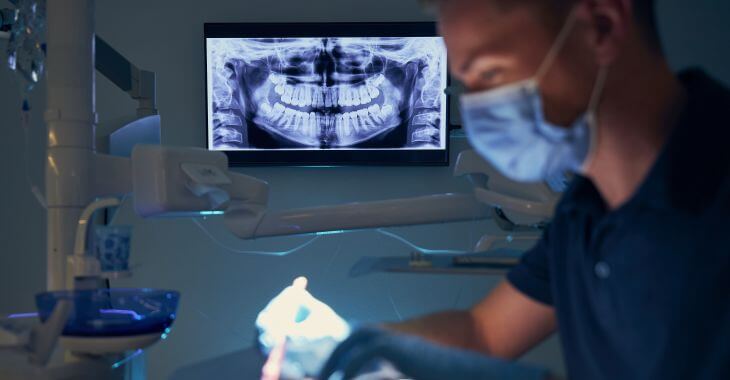
Cracks are not always visible to the naked eye. Some extend below the gumline or run along the root. Traditional X-rays capture only two-dimensional views, which may not reveal subtle fractures. Dentists often rely on several tests, including bite evaluations and light magnification.
Cracks hidden beneath the surface need advanced imaging. Modern tools improve detection accuracy and help determine whether the tooth can be saved.
Vertical Root Fracture Detection
One of the most challenging conditions to diagnose is a vertical fracture in the root. These cracks run downward, often without visible surface signs. Vertical root fracture detection requires evaluating symptoms such as swelling near the gumline, isolated bone loss, or unexplained persistent pain.
Vertical root fractures account for 3–5% of all cracked teeth, yet many go undetected until the tooth becomes infected. Identifying these fractures early helps avoid complications and guides treatment planning.

Tooth Cracked in Half – No Pain: What You Need to Know
A tooth cracked in half, no pain, might not seem urgent, but it still requires attention. Understanding the causes, potential risks, and treatments is essential...Read More
Using Cone Beam Imaging for Better Accuracy
Cone beam CT imaging has transformed dentistry. It provides three-dimensional views of teeth, bone, and surrounding structures. With this detailed imaging, dentists can examine cracks from multiple angles.
Advanced systems enhance cone beam microline visibility, helping reveal fine fractures that standard imaging cannot detect. This improves diagnostic accuracy and helps dentists determine whether a tooth is restorable or needs extraction.
Studies show cone beam imaging can increase detection of subtle fractures by up to 25%, leading to more confident treatment decisions.
Types of Tooth Cracks
Different cracks require different treatments. Understanding the type helps explain symptoms and potential outcomes.
- Craze lines: Shallow, surface-level cracks that are common and painless.
- Fractured cusp: A break near a filling or crown, usually fixable.
- Cracked tooth: A crack running toward the root; requires prompt care.
- Split tooth: A severe crack dividing the tooth; often not restorable.
- Vertical root fracture: A deep root crack that may need extraction.
Prompt diagnosis and attention lead to better outcomes for most cracked teeth.
Treatments for Cracked Tooth Pain
Treatment depends on the crack’s location and severity. The goal is to stabilize the tooth, protect nerves, and prevent the crack from spreading.
Common treatments include:
- Bonding: Filling materials seal small cracks.
- Crowns: Protective caps restore structure and prevent flexing.
- Root canals: Needed when pulp becomes irritated or infected.
- Extraction: Used when the tooth cannot be saved.
Root canals have a high success rate and often eliminate pain when cracks irritate the pulp. Crowns prevent further damage by reinforcing the tooth.
Prevention and Long-Term Care
Preventing cracked teeth reduces emergency visits and long-term complications. Simple habits protect enamel and reduce stress on teeth.
Prevention tips:
- Use a nightguard for grinding
- Avoid chewing ice or hard candy
- Wear a mouthguard during sports
- Treat decay early
- Replace aging fillings before they weaken the tooth
Regular checkups allow dentists to identify early signs of cracking and recommend protective steps.
Why Early Diagnosis Matters
A cracked tooth does not heal on its own. As the crack deepens, bacteria may enter the pulp, leading to infection. Early treatment helps preserve the natural tooth and prevents escalating pain. Cracked teeth treated promptly have significantly higher survival rates than those left untreated.
Modern tools, such as improved cone beam microline visibility and advanced vertical root fracture detection techniques, give dentists a clearer picture of the damage. This leads to more predictable, confident care.
When to Seek Care Immediately
Seek help right away if you notice:
- Sudden sharp pain while chewing
- A tooth that feels loose
- Swelling near a single tooth
- Pain followed by unexplained numbness
- A visible line that appears to grow over time
Delaying care increases the risk of infection or tooth loss.
Restoring Comfort and Protecting Your Smile
Cracked tooth pain can disrupt daily activities, but treatment options are reliable and effective. Early diagnosis, especially using modern imaging tools, helps identify the problem and preserve the tooth. With the right care, most cracked teeth can be restored to full comfort and function.

If you experience symptoms or suspect a crack, schedule an evaluation promptly. Addressing the issue early protects your smile and prevents long-term damage.
The information provided on this website, including text, graphics, images, and other materials, is intended solely for informational purposes and should not be used as a substitute for professional medical advice, diagnosis, or treatment.

)